

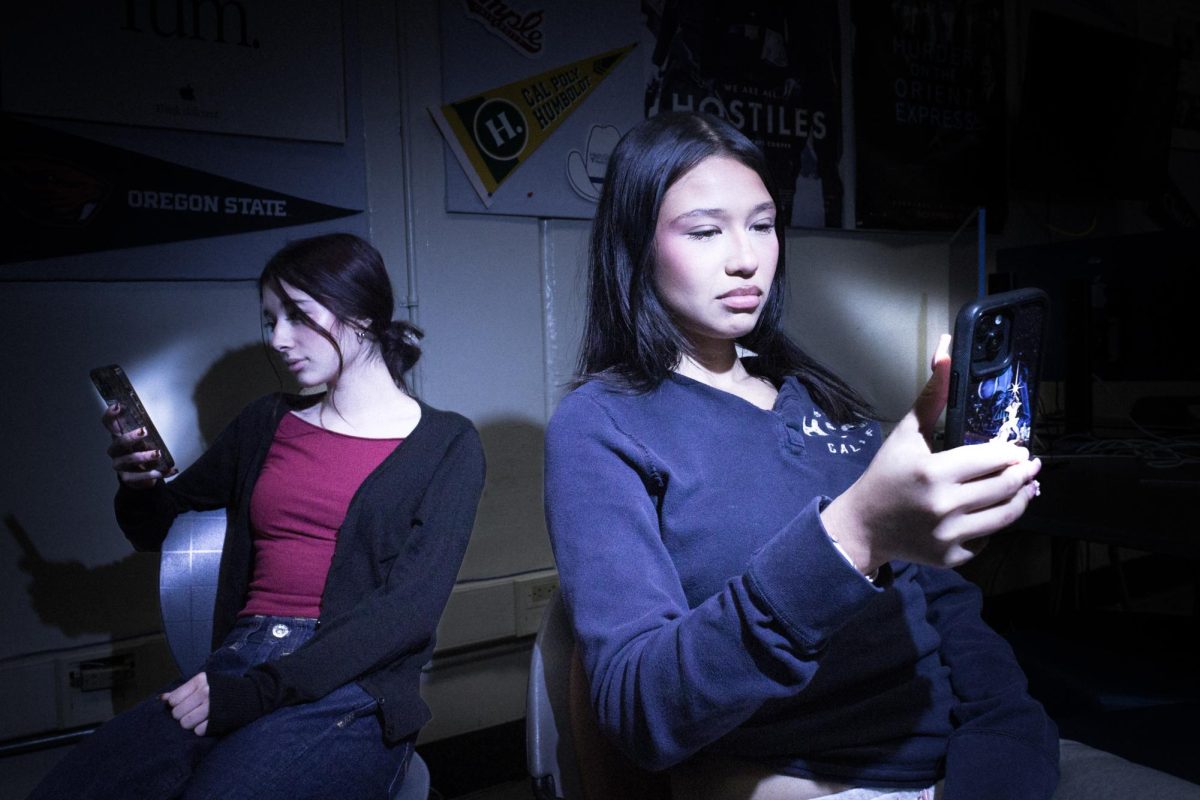
2 A.M., and you find yourself staring at the blinding blue light glowing from your screen, playing a medley of 10-15 second videos and photo collages. You’re struck with a graphic video of a recent crime in your local town, and suddenly, dread fills your body. The terror refuses to leave as you go about your day, reminding you that you could be the person you saw in the video. You look into the crime and start diving deeper into the evil, twisted people in your town. Living here has become an utter nightmare.
Doomscrolling is a process many teens engage in when scrolling through social media, looking at a variety of posts, especially those that address emotional or sensitive topics. According to one student at Quartz Hill, doomscrolling is an addictive process and often is connected to their mental health when it declines, as well as the hours of sleep they lose constantly reading problematic political updates or police reports. It takes time away from teenagers who are already suffering from a dopamine crisis and shows the ugly truth behind people’s favorite social media platforms. Another student at Quartz Hill explains that they cannot go to bed without spending a few hours on their phone, and they often wake up early, like 3 or 4. Paired with homework, school, and time spent on extracurriculars or sports, teenagers desire an outlet to mindlessly read and watch information, or something to keep them entertained. However, doomscrolling is not a proper outlet for this type of activity. Although many believe it cools the brain and promotes relaxation, the prevalence of problematic content that teenagers encounter can lead to higher cortisol spikes and even greater fear in the long run. High cortisol as a result of chronic stress often leads to weight gain, fatigue, sleep problems, mood swings, and more complications later on in life. Providing a new source of stress on top of the responsibilities many students struggle to handle results in many more issues overall, despite the fact that many of them are using these social media platforms to “relax.”
Many students have reported spending more than 10 hours a day on their phones on average, and the bulk of those hours are often spent on TikTok, the best outlet for this type of activity. The investment that teenagers put into maintaining their streaks on the app, messaging their friends, sending videos, and trying to share them, makes them have an attachment and a connection to the app that should never have truly existed. Doomscrolling is not a fatal thing, and people do not suffer from it nearly as much as I am explaining. Students at Quartz Hill have said they spend an hour or two on TikTok before going to bed, and continue to perform normally and even excel. However, these types of activities have to be done in moderation and balanced with other, truly relaxing activities, such as reading, listening to music, or even watching a show. Humans were not made to experience the high stimulation that is given to them when watching hundreds of short-form videos in a matter of hours. Take the time to put your phone down before it takes hours, days, and even weeks away from you. Free time and being alone are sacred, and they should not be spent melting brains and keeping people up.